 Invited Speaker
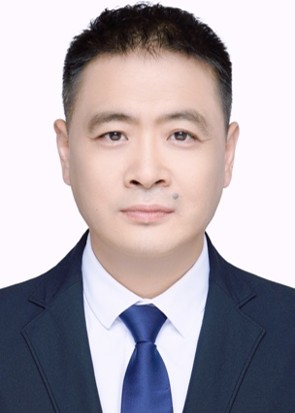
Laurence Tianruo Yang
FCAE, FEIC, MAE, MNAAI, MRAE, FIEEE
Zhengzhou University, China
Abstract:
The booming growth and rapid development in embedded systems, wireless communications, sensing techniques and emerging support for cloud computing and social networks have enabled researchers and practitioners to create a wide variety of Cyber-Physical-Social Systems (CPSS) that reason intelligently, act autonomously, and respond to the users’ needs in a context and situation-aware manner, namely Cyber-Physical-Social Intelligence. It is the integration of computation, communication and control with the physical world, human knowledge and sociocultural elements. It is a novel emerging computing paradigm and has attracted wide concerns from both industry and academia in recent years.
This talk will present our latest research on Cyber-Physical-Social Intelligence. Corresponding case studies in some typical applications will be shown to demonstrate the feasibility and flexibility.
Biography:
Laurence T. Yang got his BE in Computer Science and Technology and BSc in Applied Physics both from Tsinghua University, China and Ph.D in Computer Science from University of Victoria, Canada. He is the Academic Vice-President and Dean of School of Computer Science and Artificial Intelligence, Zhengzhou University, China. His research includes Cyber-Physical-Social Intelligence. He has published 600+ papers in the above area on top IEEE/ACM Transactions with total citations of 47000+ and H-index of 110 including 8 and 44 papers as top 0.1% and top 1% highly cited ESI papers, respectively.
His recent honors and awards include a member of National Academy of Artificial Intelligence (2025) and a member of Academia Europaea, the Academy of Europe (2021), IEEE CS Edward J. McCluskey Technical Achievement Award (2026), NAAI Distinguished AI Scholar Award (2025), IEEE TEMS Technical Achievement Award on Blockchain (2022), John B. Stirling Medal (2021) from Engineering Institute of Canada, IEEE Sensor Council Technical Achievement Award (2020), IEEE Canada C. C. Gotlieb Computer Medal (2020), IEEE TCSC Technical Achievement Award on Scalable Computing (2017), Clarivate Analytics (Web of Science Group) Highly Cited Researcher (2019, 2020, 2022, 2023, 2024, 2025), Fellow of Institution of Engineering and Technology (2020), Fellow of Institute of Electrical and Electronics Engineers (2020), Fellow of Engineering Institute of Canada (2019), Fellow of Canadian Academy of Engineering (2017), etc.
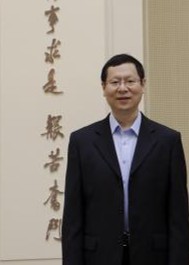
Dongya Zhao
School of New Energy
China University of Petroleum (East China), China, 266590
Biography:
Prof. Dongya Zhao is a professor and doctoral supervisor at China University of Petroleum (East China), and currently serves as Associate Dean of the School of New Energy. His research interests include intelligent process equipment, full-chain modeling and optimization for carbon dioxide capture, transportation, storage and utilization, electrification technologies for chemical processes, and automated inspection and cleaning of atmospheric vessels. He received his Ph.D. degree from Shanghai Jiao Tong University, and completed his postdoctoral research at Nanyang Technological University, Singapore, and China University of Petroleum (East China). Prof. Zhao has led several major research projects, including National Natural Science Foundation of China projects, Shandong provincial key R&D projects, Qingdao science and technology projects, as well as multiple industry-funded collaborative projects. He has achieved systematic research in process control, predictive control, sliding mode control, distributed cooperative control, and data-driven control, and has published many high-quality papers in journals such as Control Engineering Practice and Journal of Process Control. He has received several provincial- and ministerial-level awards, including the Second Prize of the Ministry of Education Science and Technology Progress Award and the First Prize of the China Energy Conservation Association Science and Technology Progress Award. He also serves on several professional committees of the Chinese Association of Automation and as an editorial board member of international journals.